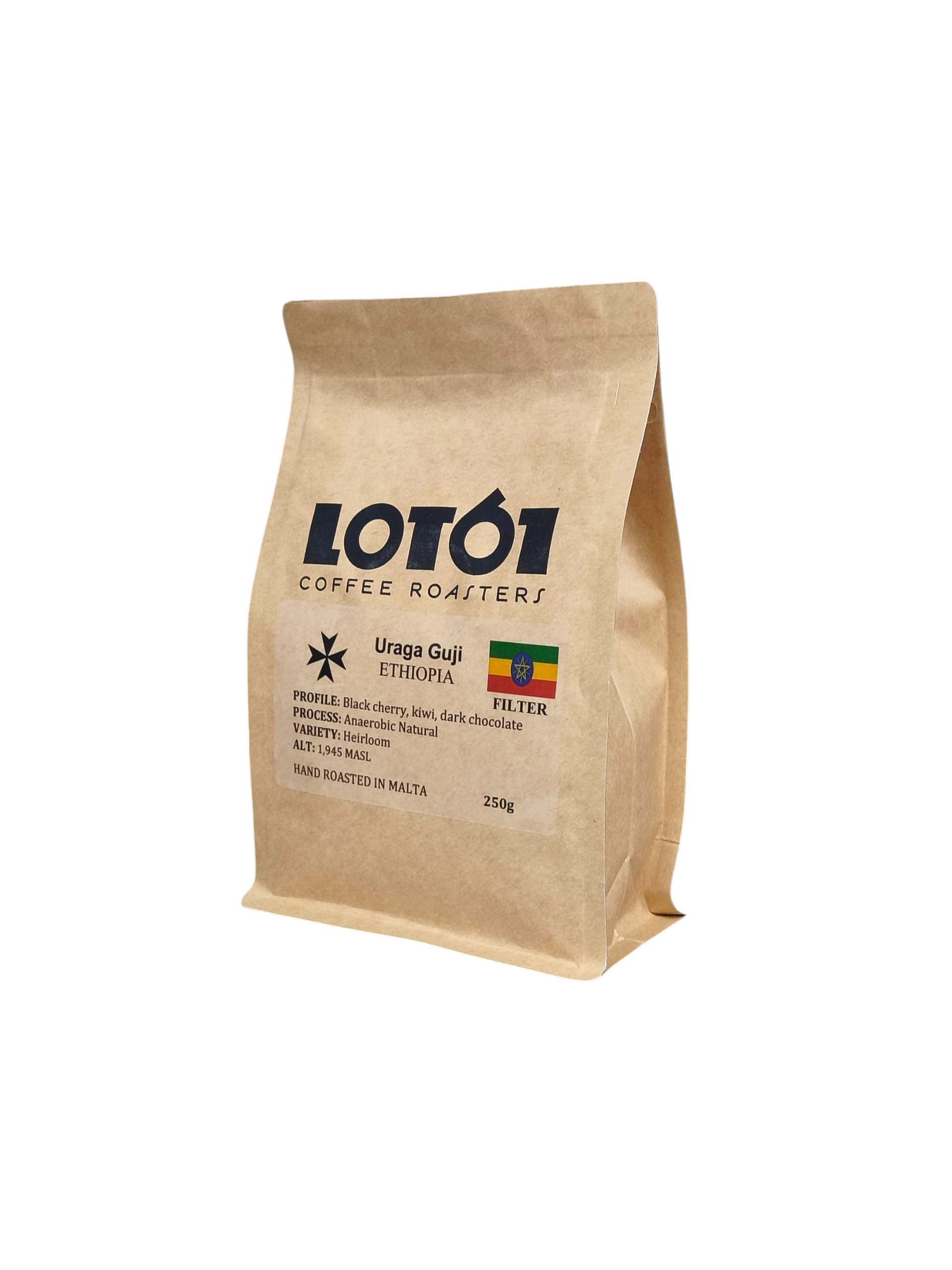
Ethiopia - Uraga, Guji (Filter)
Country: Ethiopia
Region: Guji
Farm: Uraga Washing Station
Altitude: 1,925 to 1,945 m.a.s.l.
Variety: Heirloom
Processing: Anaerobic Natural
Descriptors: Black Cherry, Kiwi, Dark Chocolate, Mango, Tropical Fruit, Brown Sugar, Pineapple
Our in-country partner, Tracon Coffee, has been experimenting with new processing methods as a way to increase value and stand out among a growing number of specialty washing stations in Ethiopia. Tracon has been trialing anaerobic fermentation with several of their washing stations in Yirgacheffe since 2015.
Uraga washing station receives cherry from farmers in the surrounding region. The station is located in Guji, a coffee-growing region that was once part of Yirgacheffe but whose microclimate produces such unique coffee, that it was allocated as its own coffee-growing region.
Farming methods in the region remain largely traditional. Guji farmers typically intercrop their coffee plants with other food crops. This method is common among smallholders because it maximizes land use and provides food for their families.
In addition to remaining traditionally intercropped, most farms are also organic-by-default. Farmers in Guji typically use very few — if any — fertilizers or pesticides. Most farm work is done manually by the immediate family.
To capitalize on the magnificent climate, Uraga washing station provides training to help farmers produce better quality cherry. Training focuses on procedures for harvesting and transporting cherry.
Farmers selectively handpick ripe cherry and deliver it to the station. At intake, employees visually inspect cherry and accept only fully ripe cherry for anaerobic fermentation. Selected cherry is tightly packed in GrainPro bags and sealed shut. Cherry ferments anaerobically (without oxygen) for 18 to 24 hours.
After fermentation, cherry is carefully removed from bags and laid to dry in direct sunlight on raised beds. Workers turn cherry frequently to promote even drying. It takes approximately 2 to 3 weeks for cherry to dry.
Grade 1 coffee
Grades in Ethiopia depend on visual inspection for defects and on cup quality. Grade 1 is considered the highest quality coffee. Grade 1 and 2 are considered specialty coffee, grades 3-9 are classified as commercial coffee. Grade 1 is free of cup faults and taints and has zero quakers.